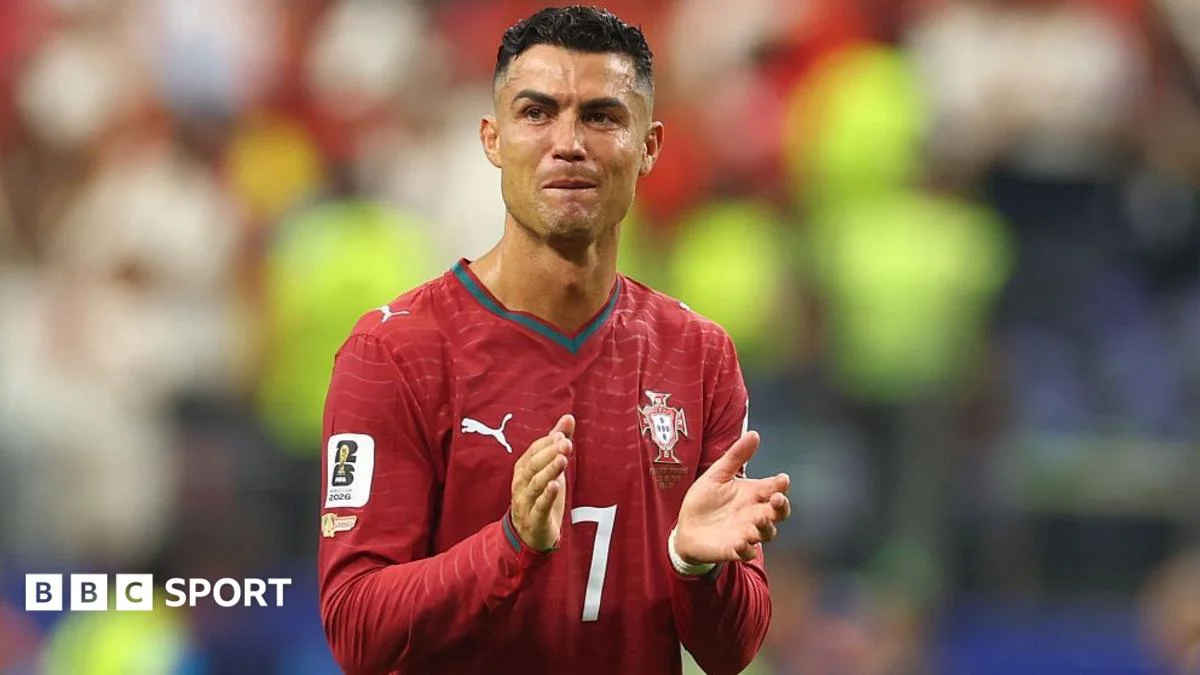
Ronaldo retires from Portugal duty after 23 years and training-camp fallout
Cristiano Ronaldo has ended his international career at 41 after a dispute with coach Jorge Jesus, leaving Portugal to weigh a record scoring legacy against a messy exit.
Cristiano Ronaldo has retired from international football at the age of 41, closing a 23-year Portugal career in which he scored 146 goals in 234 appearances. His final match came on 24 September against Wales. The departure followed a dispute with coach Jorge Jesus after Ronaldo left the training camp without permission; he was sanctioned with a 30-day punishment, already served, and a fine of 255 euros, and Jesus left him on the bench for one game before indicating he would not start him in the next.
The manner of the exit has left a bitter taste, even as a message circulated in Portugal thanking him as a global ambassador and an inspiration to millions. Jesus said the door remained open and the decision was Ronaldo's, but it was clear he was no longer an automatic starter — a situation the article says he has never handled well. The federation has announced a special tribute to honour his contribution.
The article traces a career marked by clashes with coaches as well as closeness with team-mates. Luiz Felipe Scolari reprimanded a young Ronaldo publicly but privately told him he could one day captain Portugal. At 19, Ronaldo was in the Portugal side beaten by Greece in the Euro 2004 final in Lisbon, an early disappointment that left a lasting hunger, and he took over the number 7 shirt and the team's leadership after Luis Figo left the national side in 2006.
Under Fernando Santos, the article says, Ronaldo changed, accepting a centre-forward role alongside Nani during Euro 2016. He left the final in Paris injured, but encouraged his team-mates at half-time and, before extra time, told Eder he would score; Eder did, giving Portugal its first European Championship. Ronaldo later scored a hat-trick against Switzerland to reach the first Nations League final, which Portugal won, and lifted a second Nations League in 2025.
The sociologist Joao Nuno Coelho is cited as saying the national team became a representation of Portuguese identity and the country's need to be seen abroad, with Ronaldo at its centre — a figure who created contradictory feelings. Former international Jorge Andrade said some supporters preferred figures such as Figo, Eusebio, Paulo Futre or Rui Costa, though Portugal remained proud of him and doubts eased with the titles. The article concludes that he leaves Portugal expecting to contend at every tournament, even as fans are denied the celebration they wanted.