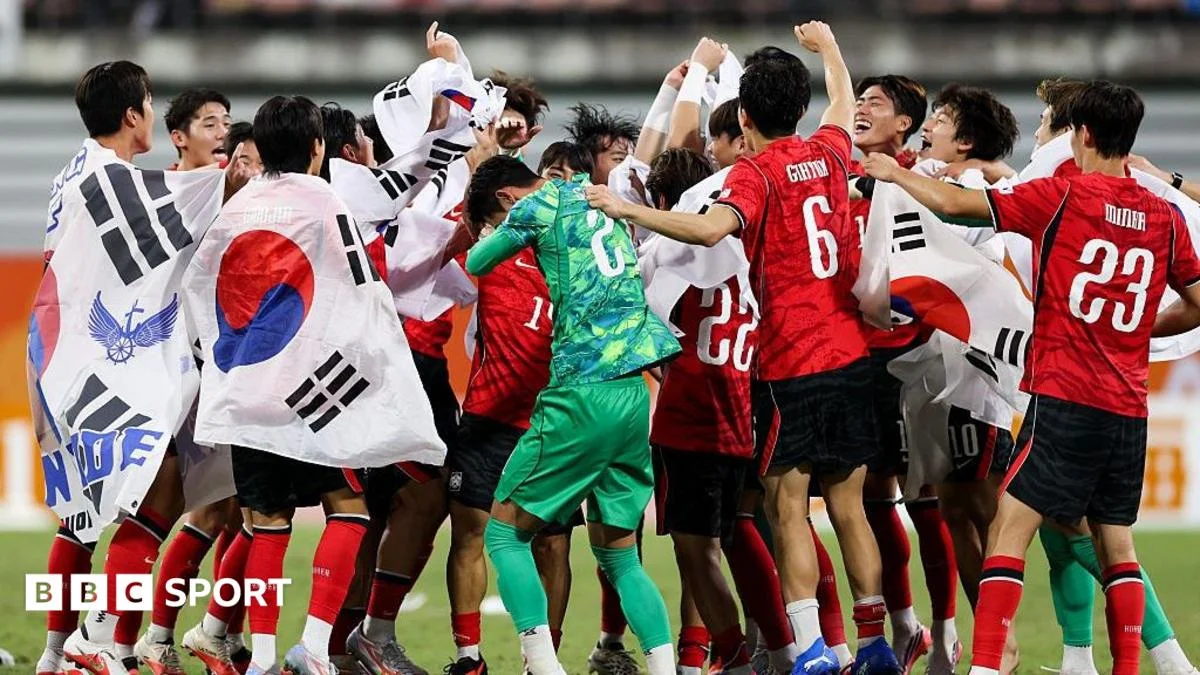
South Korea to Review Military Exemption After Asian Games Celebration
South Korea's government will review its athlete military exemption system following controversy over footballers' celebrations at the Asian Games.
South Korea's government has announced it will review the military service exemption granted to athletes, after controversy erupted over the behavior of South Korean footballers at the Asian Games. The team defeated hosts Japan in the final, but three players, including captain Lee Gi-hyuk, were criticized for celebrating their exemptions. Lee held up his gold medal and declared he was "not going to the military," sparking outrage at home. He later apologized.
Under current rules, South Korean men must complete 18 to 21 months of active military service before age 28. However, Asian Games gold medallists and Olympic medallists of any color are exempted from full service, only required to undergo basic training lasting less than a month. The system has been in place for over 50 years.
Culture, Sports and Tourism minister Choi Hwi-young called Lee's remarks "utterly immature" and said the system "will inevitably have to be scaled back." At a National Assembly committee hearing, Choi acknowledged the system's role in helping outstanding athletes and artists develop their abilities but noted that values of fairness and public perceptions of military service have changed. He agreed a comprehensive review is needed.
Democratic Party of Korea member Cho Kye-won questioned Choi, stating the incident "left young people with a serious sense of unfairness." Cho pointed out that over 80% of exemptions are concentrated in the Asian Games, and at this year's event, 36 of the 44 beneficiaries were in soccer and baseball. He argued that winning a world championship in any sport is harder than winning the Asian Games, yet world champions receive no such benefit.
The government's review could lead to changes in how military exemptions are awarded to athletes, addressing concerns about fairness and the concentration of benefits in specific sports. The outcome remains uncertain, but the debate highlights shifting public attitudes toward military service and athletic achievement in South Korea.
Image: Getty Images / BBC Sport