Uefa Women's World Cup play-offs face scrutiny after lopsided ties
England's 8-1 aggregate win over Greece has renewed questions about whether the European qualifying play-off structure is fit for purpose.
England's 8-1 aggregate victory over Greece in the first round of the Women's World Cup qualifying play-offs has highlighted the lopsided nature of the current format. Sarina Wiegman's side, ranked 55 places above their opponents, won comfortably across two legs, even though Greece produced a creditable performance in their 3-1 home defeat. The tie was one of several mismatches on the night, with Europe's leading nations dropping into the play-offs and recording emphatic wins against lower-ranked teams.
The imbalance stems from the league phase, where only one team per group earned automatic qualification. The Netherlands, Norway, Sweden and the Republic of Ireland all finished behind higher-ranked rivals and then overwhelmed weaker opposition. The Netherlands beat Hungary 11-0 on aggregate, Norway defeated Romania 8-0, while Sweden and the Republic of Ireland thrashed their opponents 15-0 and 12-0 respectively. England, drawn with world champions Spain, finished second in League A3 despite accumulating 15 points and beating Spain 1-0 at Wembley.
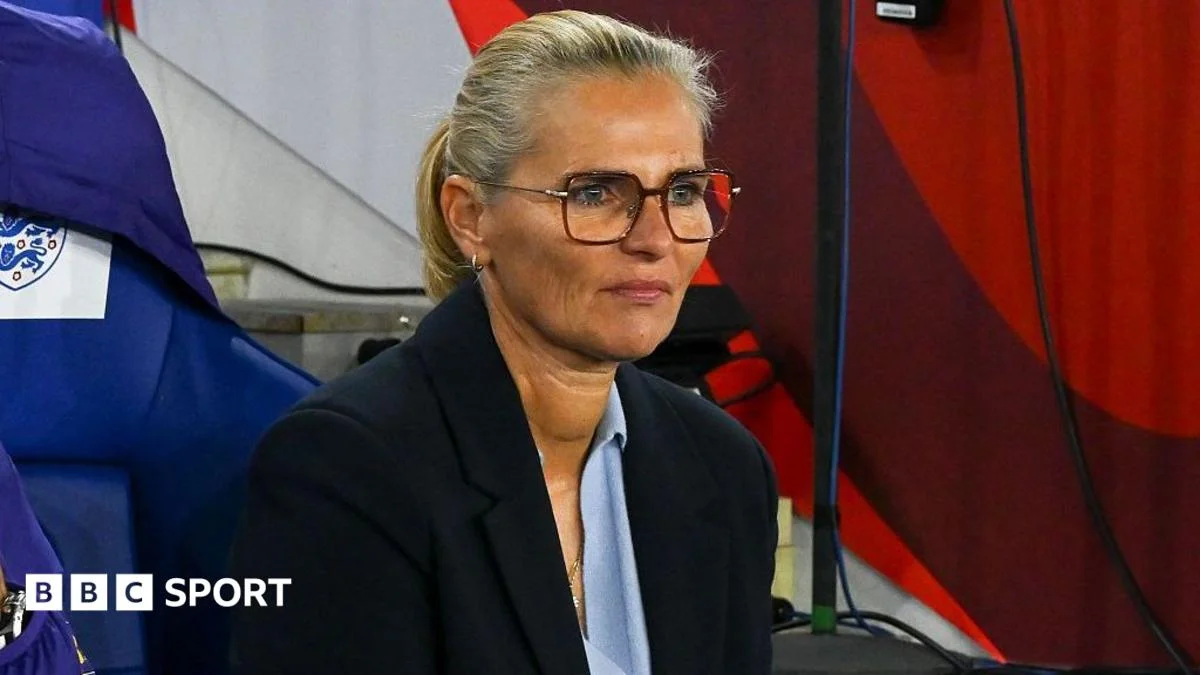
Wiegman acknowledged the situation but said her focus is on the next tie. "Of course we wanted to qualify straight away, that's not the case," she said, adding that Uefa will review the set-up and that it is not her place to do so. England now face Ukraine, a team they already beat twice in the league phase by a 9-1 aggregate score, with the first leg away on 1 December and the return at Wembley on 5 December.
The heavy scorelines contrast with the growing competitiveness of the women's game. England's recent record includes narrow wins over Haiti at the 2023 World Cup and a quarter-final test against Colombia, while they missed the 2024 Olympics after finishing behind the Netherlands. At Euro 2025 they needed two penalty shootouts. Meanwhile, top sides such as Germany, Japan, Brazil, Argentina, the United States and Spain have been playing each other in friendlies, leaving England short of similar high-level preparation.
Fifa has confirmed the 2031 Women's World Cup will expand from 32 to 48 teams, though it is too early to judge that decision. For now, supporters and observers argue that the one-sided play-off results are less a reflection of the global game's depth and more a consequence of a European qualification process that disadvantages the majority of teams.
Image: Getty Images / BBC Sport